
Gold Price: Why It Matters and What Drives It

Apr 23


If you had to pick one asset that people trust when things go wrong, it would probably be gold.

The gold price isn’t just another number on the chart. It reflects something deeper — fear, confidence, and where money is flowing globally. When markets feel stable, gold is quiet. But when uncertainty shows up, gold suddenly becomes one of the most watched assets in the world.
It’s not because gold grows fast. It’s because gold doesn’t break easily when everything else feels unstable.

Gold as a Safe-Haven Asset: Why Investors Buy in 2026
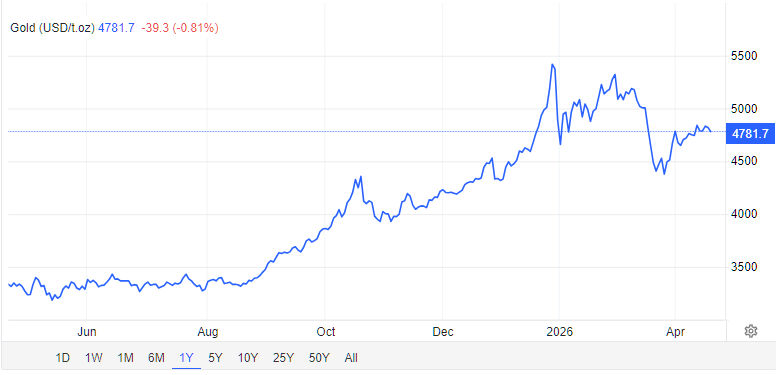
When everything is going well, people chase growth.

When things feel uncertain, people protect capital.
That’s the role gold plays – it's not about getting rich fast; it’s about not losing value.

Top 5 Factors That Drive Gold Market Volatility

Instead of memorising everything, think about relationships:

Situation  What Happens to Gold Why
Inflation rising Gold ↑ Money loses value; gold holds value
Interest rates falling Gold ↑ Less competition from banks/bonds
USD weakening Gold ↑ Gold becomes cheaper globally
Market fear increases Gold ↑ Investors move to safety
Strong economy Gold ↓ / sideways Money flows into risk assets

How Gold Behaves

Gold doesn’t behave like a slow-moving investment asset. It behaves more like a reaction-based market. Sometimes it trends strongly for days or weeks when a macro theme is in play — like inflation cycles or interest rate expectations. Other times, it becomes extremely reactive, especially during news events. What makes gold tricky for traders is that it can:

- trend smoothly in one phase 

- then suddenly spike and reverse in another 

This is why gold requires both directional understanding and risk control. It rewards traders who understand context, not just patterns.

Scenario Gold's Likely Reaction Why?
Fed Raises Rates Short-term Drop Higher yields make non-interest assets like gold less attractive.
Inflation Spikes Strong Rally Gold acts as real money when fiat currency loses purchasing power.
Geopolitical Conflict Sharp Spike Investors rotate to "Safe Haven" assets to protect capital.
Stock Market Crash Initial Drop, then Rally Investors sell gold to cover margin calls, then buy it back for safety.

When Gold Becomes Interesting

Gold is usually quiet when there is no major economic pressure.

But it becomes active when the market is forced to reprise expectations.
For example:
- When inflation data comes in higher or lower than expected 
- When central banks change interest rate expectations 
- When global risk events suddenly appear 
- When the US dollar starts shifting direction strongly 
These are the moments when gold transitions from “slow movement” to “high opportunity market.”
Event Expected Reaction
CPI (Inflation data)  High volatility
FOMC / rate decisions Strong trends or reversals
NFP (Jobs data) Short-term spikes
Global crisis/news Sustained moves

The Simple Rule to Remember

If you simplify everything into one idea:

Gold rises when trust in the system declines.

That is the core principle.
When markets are stable and confidence is high, capital flows into risk assets like equities and growth investments. Gold tends to stay quiet in these conditions because there is less need for capital protection.
When confidence weakens due to inflation concerns, interest rate uncertainty, or currency weakness, behaviour shifts. Investors move towards assets that they see as more reliable stores of value, and gold becomes more attractive.
This is why inflation, interest rates, and US dollar strength all matter. They are simply different signals of the same underlying factor: market confidence.
When trust falls, gold demand rises. When trust improves, gold demand eases.

Frequently asked questions (FAQ):

1) Why is gold considered a safe haven asset?

Gold is categorised as a safe haven because it lacks counterparty risk. Unlike a bond which represents a government promise or a stock which represents company performance, gold is a physical asset with inherent value. When investors lose confidence in the ability of institutions to meet their obligations, they move capital into gold to protect their wealth from systemic instability.

2) How do interest rates influence the price of gold?

Gold has an inverse relationship with interest rates because it does not provide a yield such as interest or dividends. When rates are high, investors often prefer savings accounts or bonds that pay a return, which increases the opportunity cost of holding gold. Conversely, when rates are low, the benefit of holding cash diminishes, making gold more attractive as a store of value.

3) Why does gold typically rise when the US dollar weakens?

Gold is priced in US dollars on a global scale. If the dollar loses value, it requires more of that currency to purchase the same amount of gold, which naturally elevates the price. Additionally, when the dollar loses its appeal, international investors often seek non-fiat alternatives, making gold the most liquid and trusted option available.

4) Is gold an effective hedge against inflation?

Historically, gold acts as a form of real money. When the cost of living increases and the purchasing power of paper currency falls, the price of gold tends to adjust upward to account for that loss in value. While it may not generate rapid wealth during inflationary periods, it serves to prevent the erosion of existing capital as the currency devalues.

5) What is the fundamental rule for predicting gold price trends?

The most effective way to track gold is to monitor the level of global confidence. Gold prices typically rise during a trust deficit, which occurs when there is declining faith in the economy, the stability of governments, or the strength of paper money. When the world feels stable and growth is consistent, gold remains quiet. When the global outlook becomes uncertain, gold becomes a primary defensive tool for the market.
